
About the Partnership
Background
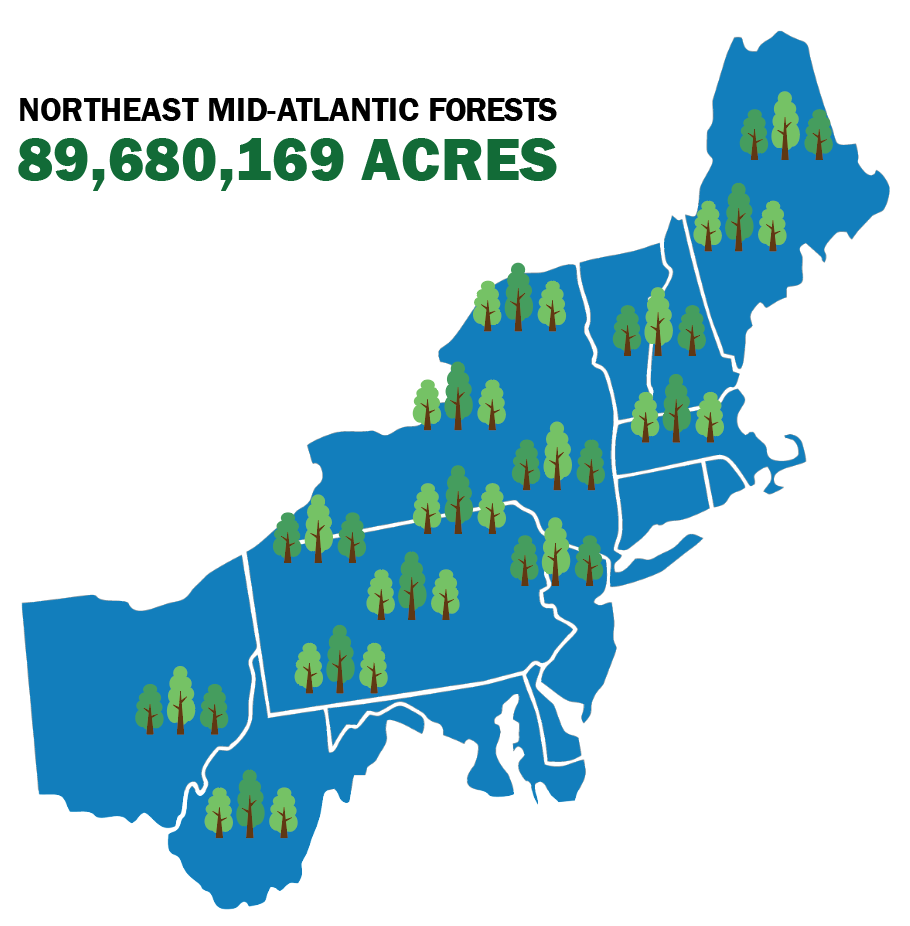
The Northeast Mid-Atlantic Partnership for Forests and Water (“the Partnership”) is an interagency, multi-partner collaborative to enhance concerted, science-based restoration of priority forest landscapes to improve water quality and quantity in 13 states in the Northeastern and Mid-Atlantic United States. The Partnership’s footprint encompasses Maine, New Hampshire, Vermont, Massachusetts, Rhode Island, Connecticut, New York, New Jersey, Delaware, Maryland, Pennsylvania, West Virginia, and Ohio. The region’s numerous streams, lakes, and reservoirs provide drinking water to 66 million people, or around 40% of the American population. Approximately 25% of U.S. forests are located in the Northeast and Midwest regions, with a total of 89,680,169 forested acres within the Partnership area.
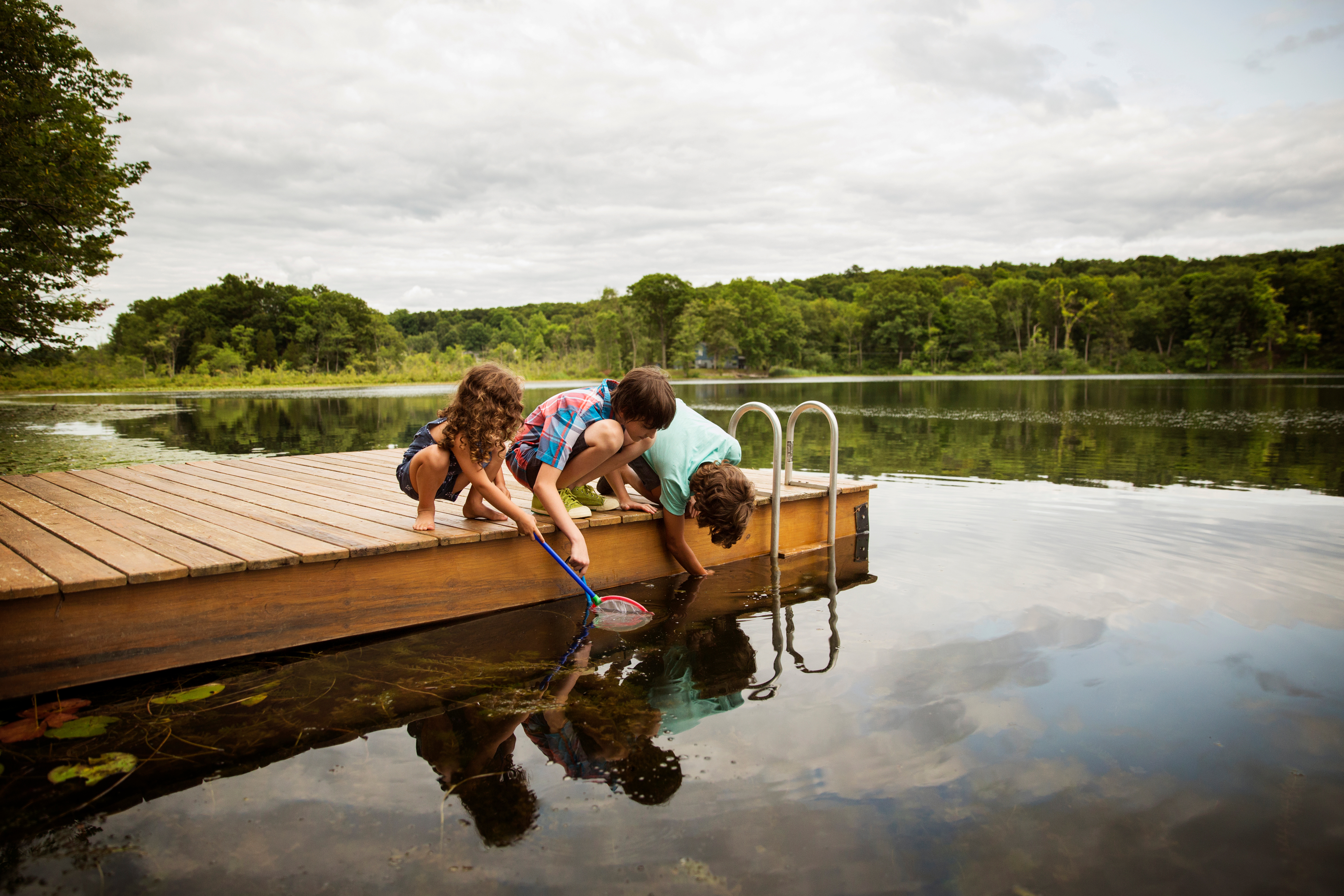
Forests filter sediments and other pollutants before they reach water sources, providing clean water that is vital to communities and habitats. Regional collaboration helps mitigate the multiple pressures that threaten forests (e.g., fragmentation, invasive species, abiotic disturbances) and highly effective coordination across states, multiple levels of government, and non-governmental partners is essential given the multitude of entities with management responsibility related to forests and water. The Partnership creates a space for collaboration and alignment between the forest and water sectors to maximize investments and improve program delivery and outcomes across the region. It also includes and supports regional and state-led efforts that work to restore and protect forested lands and priority watersheds.
Vision
Resilient and well-managed forests that improve
water resources and create healthy watersheds.
Mission
To create a collaborative network that leverages
resources to manage, restore, and conserve forests and
protect water resources.
Values
The values of the Partnership (see graphic to the right) create the framework for making governing and operational decisions. We are committed to creating respectful spaces for intentional collaboration that allow for equitable input. In making all voices heard, we produce outcomes that are both community-informed and focused.
Intentional collaboration: We unite the interests of partners and communities and promote cross-agency initiatives from forest and water professionals to improve overall water quality and protect forested landscapes. The Partnership is most successful when we bring together agencies (federal, state, and local), the general public, and industry/utilities/NGOs/corporate stakeholders.
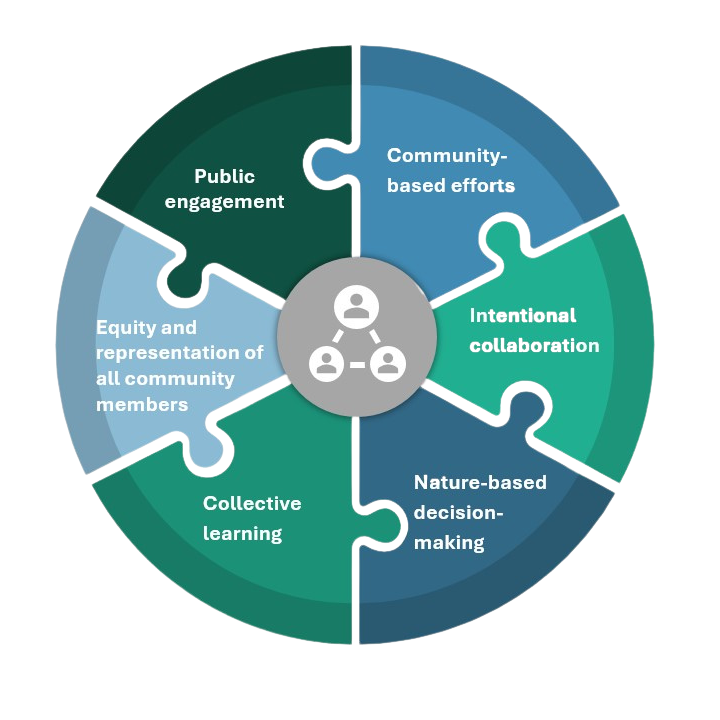
Community-based efforts: We recognize the importance of input and engagement from on-the-ground contributors to enact meaningful impact. Working with private forest landowners and producers with forested lands is a key focus of our work.
Public engagement: We prioritize increasing public awareness of where water comes from and engaging with public stakeholders, including universities.
Nature-based solutions: Our efforts are inspired by following natural systems as the ultimate green infrastructure.
Collective learning: We seek expertise and insight from our partners and members to increase collective knowledge and partnership capacity.
Equity and representation of all community members: We recognize historical structures have disproportionately affected communities in the region today. We also recognize that healthy forests are diverse forests, and so we value diversity in backgrounds and opinion to create a more equitable landscape for the future.
2025 Regional Partnership efforts included:
Updating the Partnership website and communication tools.
Convening over 90 partners from across the region at a forum in Connecticut.
Supporting on-the ground restoration projects in multiple states.
Growing the Partnership network to 265 members.
Documenting and sharing accomplishments through regular touch points and reports.
Organizing meetings and creating tools to engage landowners and align partners.
Supporting state-led efforts and implementation of on-the-ground projects in the region.
What’s new in 2026?
State Implementer efforts include:
Ohio moved from outreach to implementation by launching a cost-share program for loggers and foresters, finalizing an application process, and promoting the program at statewide forestry and watershed events. The first payment to a
logger is expected in late 2025, which will mark a key milestone for BMP adoption. The program will continue into 2026.
Connecticut advanced nature-based solutions through new legislation, launched a riparian buffer task force, and secured funding for supplemental cost-share programs to help landowners implement resilient forest practices. The state also initiated Technical Service Provider training for foresters starting in 2026.
West Virginia is initiating implementation efforts, leveraging partnerships with Trout Unlimited and conservation districts to restore riparian areas and steam banks. Planned activities include at least 5 acres of riparian restoration, 1 mile of agricultural exclusion fencing, and protection of 0.65 miles of in-stream habitat.
Pennsylvania is preparing to launch outreach and demonstration projects to promote riparian buffer restoration. They will establish at least four demonstration sites and engage over 5,000 private forest landowners and stakeholders through education and state program connections.

 Northeast Mid-Atlantic Partnership for Forests and Water